
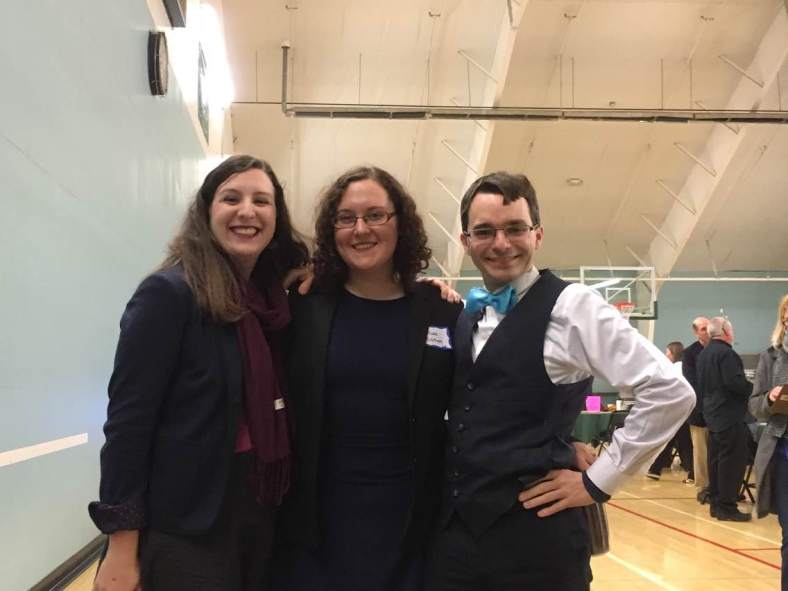
On August 1st, I presented a talk entitled “Out of the Attic, Into the Lab: building a shrink ray is harder than it looks”. The talk was part of the Science and a Movie program, a series put on by Central Cinema and the Pacific Science Center. The series pairs talks from scientists in the Seattle area with silly or classic movies (in this case “Honey I Shrunk the Kids”).
In “Honey I Shrunk the Kids” Wayne Szalinski builds a prototype for a shrink ray in his attic. For many reasons, this is not the best idea (never leave your labs unlocked and unattended). But America has a long history of people inventing in their homes (think of Hewlett-Packard, or the telephone), so there’s got to be some appeal, right? In reality, the feasibility of working in a non-lab setting largely comes down to what the prototype is meant to do. A lot of new technology (computers, electronic testing equipment) is easy to make anywhere you have access to an empty space and electricity. But a lot of scientific technology (like the Large Hadron Collider, or, let’s be real, a shrink ray) requires specialized settings, materials, or people, and so is much easier to accomplish in academic settings.
This is especially true in my area of research, bioanalytical chemistry. Because bioanalytical chemistry focuses on identifying and quantifying chemicals that affect living things, we’re often using samples and methods that require a specialized physical space where we have a lot of control. For example, my graduate work has focused on understanding how the shape of a protein determines what job it does inside your body. Problem is, proteins are so small we have to develop special tools just to look at them. These tools can involve freezing the proteins, shoots lasers at them, putting them in extreme low-pressure environment,* etc. None of these things are particularly feasible to do in a garage. Plus, building bioanalytical machines in academic institutions gives me access to people who can help me work around design challenges or offer advice when things go wrong (and they always go wrong). Best of all, I don’t have to worry about accidentally shrinking any nosy kids.
Thanks to Central Cinema and the Pacific Science Center’s Meet a Scientist program for the opportunity!
This blog post was also published on the Bush Lab web page.
* I don’t mean making them feel relaxed- we put them in an aluminum box, suck almost all the air out, and then move the proteins around.
 Rae Eaton