Beyond the simple set-up for the modifiable machine that I’ve discussed elsewhere, there are several additional modifications I’ve created for the machine demo. These modifications increase the number of sample balls that can be tested and surfaces that can be used to cover the ramp. The three sets of samples and two additional surfaces are designed to model those used in basic chemical separation machines.


The three samples of balls are shown, along with their bags, above. Sample 1 consists of five clay balls of roughly the same weight but formed into different shapes. Sample 2 contains three clay-core balls that have crocheted outer covers made of hemp, cotton, or fuzzy acrylic and one rubber band ball. Sample 3 contains two tennis balls and a small clay-core ball with a crocheted outer cover made of hemp. All the balls in each sample set of differ from each other by one characteristic: shape (sample 1), surface material (sample 2) or size (sample 3). Each sample set will require different modifications to the demo machine in order to reliably separate the balls from each other as they roll down the ramp.
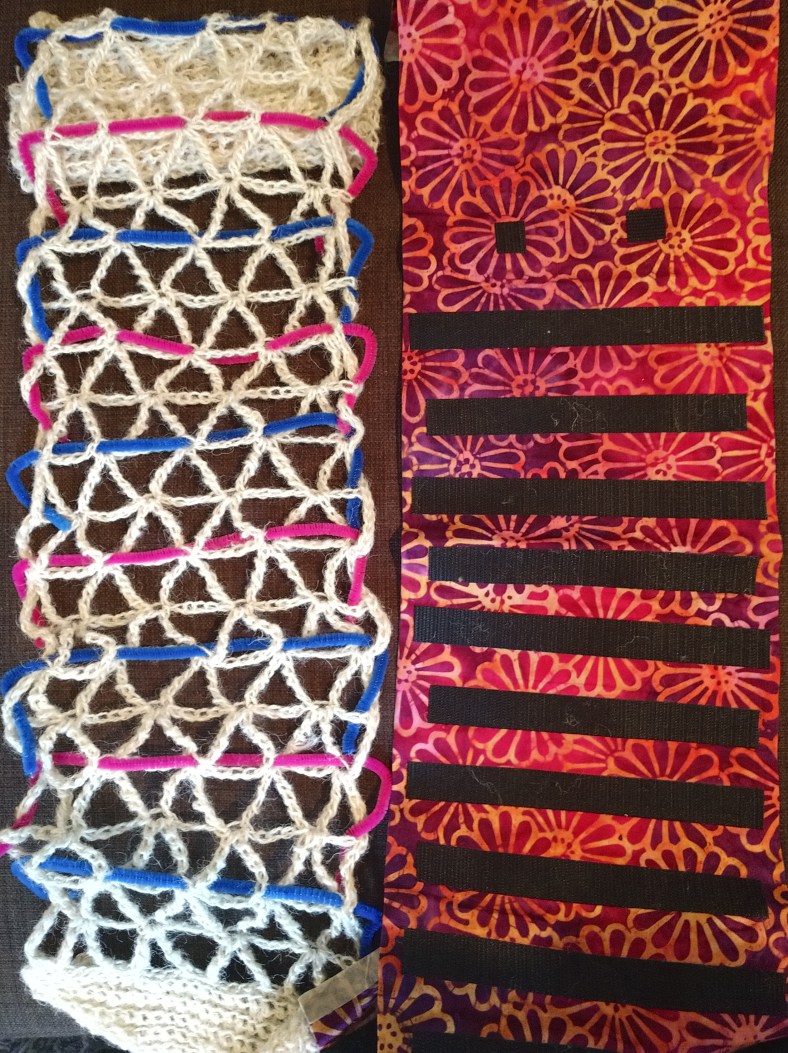 Two ramp covers made to further modify the machine.
These two ramp covers were made to change the surface of the machine ramp. The cover on the right is a cotton fabric surface covered in strips of Velcro; the Velcro will catch on the surface of the balls in sample 2 to varying degrees based on the outer material. The more frequently the ball catches on the Velcro surface, the slower it will move. Rubber will interact minimally with Velcro, whereas at lower ramp heights the fuzzy acrylic ball will interact strongly enough with the Velcro that it becomes trapped on the ramp surface.
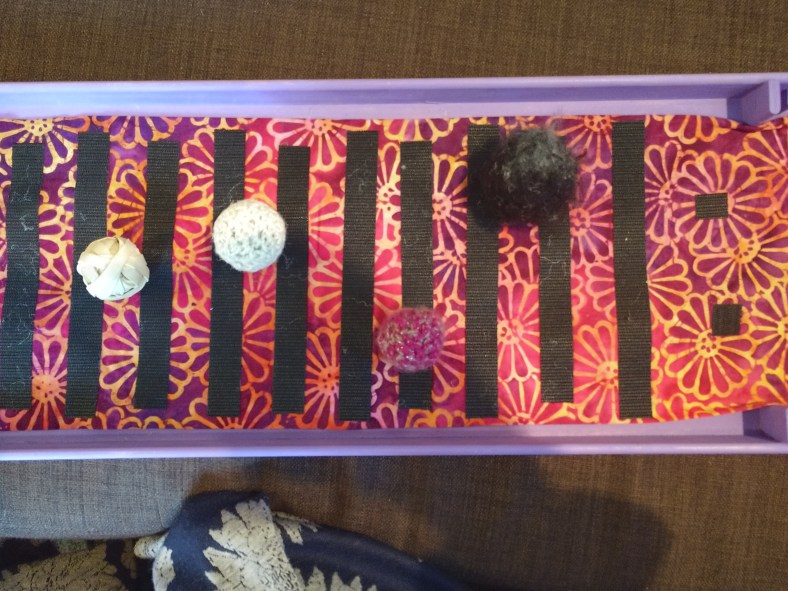 Sample 2 on a ramp modified with Velcro.
The second ramp cover is made from a crocheted hemp net held open with pipe cleaners (if you’re not a crocheter you can probably find nets at a hardware store); the trick with this cover is getting openings of the right size. This cover will slow down any balls that are the opening size or smaller, as those balls will role continuously in and out of the net holes. Larger balls, meanwhile, will role over net holes without being significantly slowed down by them.
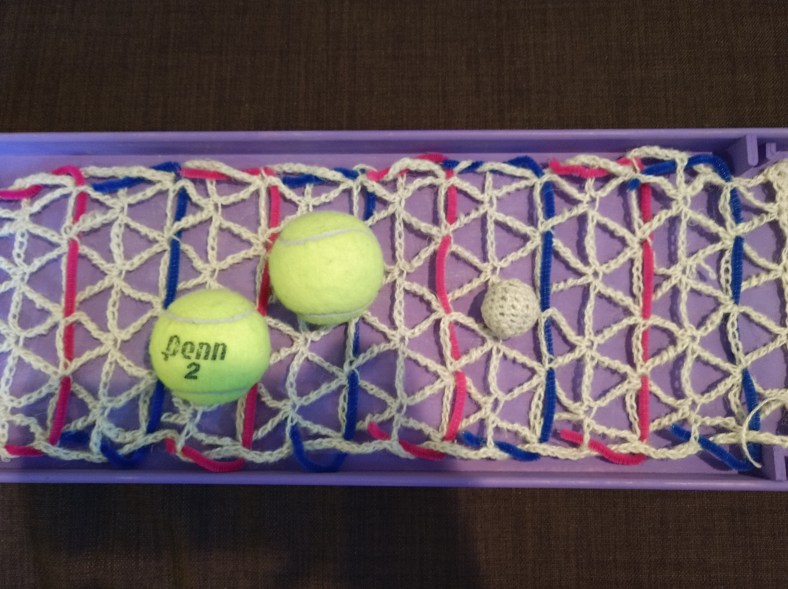 Sample 3 on a ramp modified with the netting
 Rae Eaton